5 Key Elements for a High-Quality Customer Support Checklist
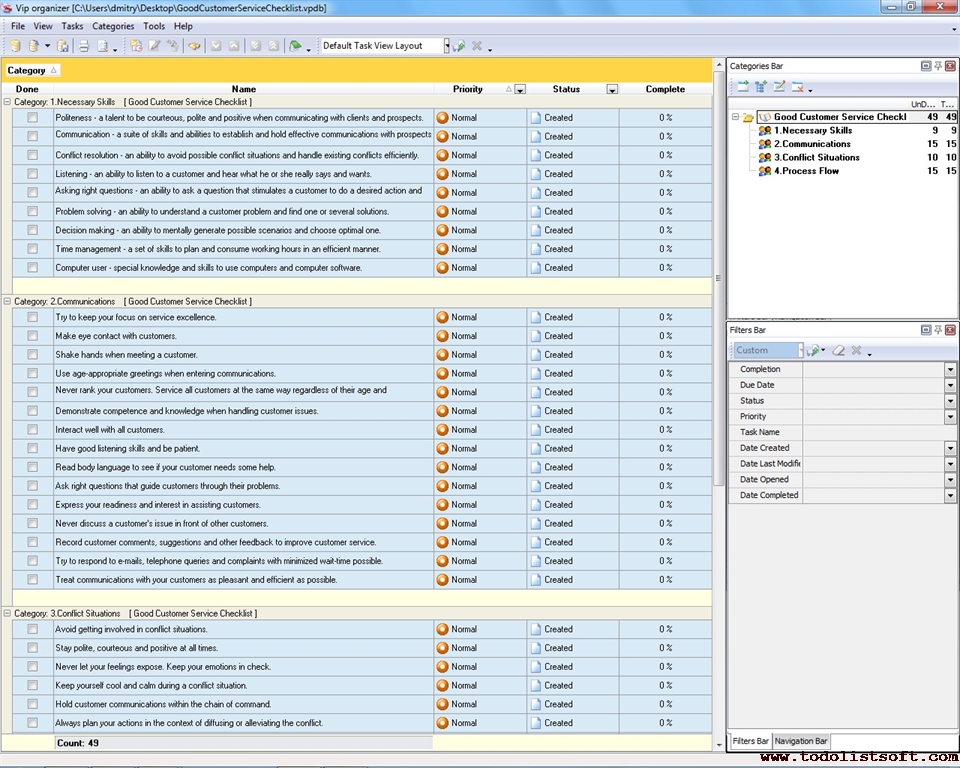
Creating a high-quality customer support checklist is essential for any business that prioritizes customer satisfaction. Here are 5 key elements to consider:
- Response Time: Ensure your team has defined response time goals. Quick acknowledgments reduce customer frustration and keep them engaged.
- Empathy Training: Equip your support staff with training that emphasizes empathy. Understanding a customer’s emotions can significantly improve their experience.
Incorporating these elements into your checklist can lead to remarkable improvements in customer support quality. Remember the last three important points:
- Knowledge Base: Develop a comprehensive knowledge base that both your team and customers can access for quick resolutions.
- Feedback Loop: Implement a system for collecting and analyzing customer feedback to continually refine your support processes.
- Accessibility: Make sure your support services are easily accessible on multiple channels, such as chat, email, and phone.
If you're looking to enhance your gaming experience, be sure to check out the latest duel promo code. This special offer can unlock exciting bonuses and rewards to elevate your gameplay.
The Ultimate Guide to Evaluating Customer Support: Yours vs. Theirs
When it comes to evaluating customer support, businesses must first assess their own services before comparing them to competitors. Start by analyzing key performance indicators such as response time, resolution rate, and customer satisfaction scores. Conducting regular surveys and utilizing feedback tools can provide insights into your customers' perceptions. Remember, effective customer support doesn't just resolve issues; it builds lasting relationships. Use metrics like Net Promoter Score (NPS) and Customer Satisfaction Score (CSAT) to quantify and improve your support experience.
Once you have benchmarked your own support levels, it’s time to examine the customer support offered by your competitors. Look for transparency in their processes, the availability of multi-channel communication options, and the overall quality of assistance provided. Conduct mystery shopping exercises by reaching out to their support teams to assess their responsiveness and effectiveness. Also, consider checking online reviews and ratings to get a clearer picture of their service reputation. Understanding the landscape will empower you to identify areas where your support can excel and stand out from the competition.
How to Create a Proactive Customer Support Quality Measurement Strategy
Developing a proactive customer support quality measurement strategy is essential for any business aiming to enhance customer satisfaction and retention. Begin by establishing clear objectives and key performance indicators (KPIs) that resonate with your company’s goals. These KPIs may include metrics such as response time, resolution rate, and customer satisfaction scores. Additionally, leverage customer feedback through surveys and reviews to gain insights into areas for improvement. This approach not only helps in tracking performance but also allows you to anticipate customer needs before they escalate into issues.
Furthermore, regularly analyze the data collected from your measurement strategy to identify patterns and trends. Use tools like scorecards and dashboards to visualize performance metrics over time, enabling your support team to recognize successes and identify areas for growth. Implementing routine training sessions based on these findings can empower your staff to deliver a higher level of service. Ultimately, a proactive customer support quality measurement strategy fosters a culture of continuous improvement that not only elevates customer experiences but also enhances the overall efficiency of your support operations.